Essential Tips After Gastroscopy and Colonoscopy
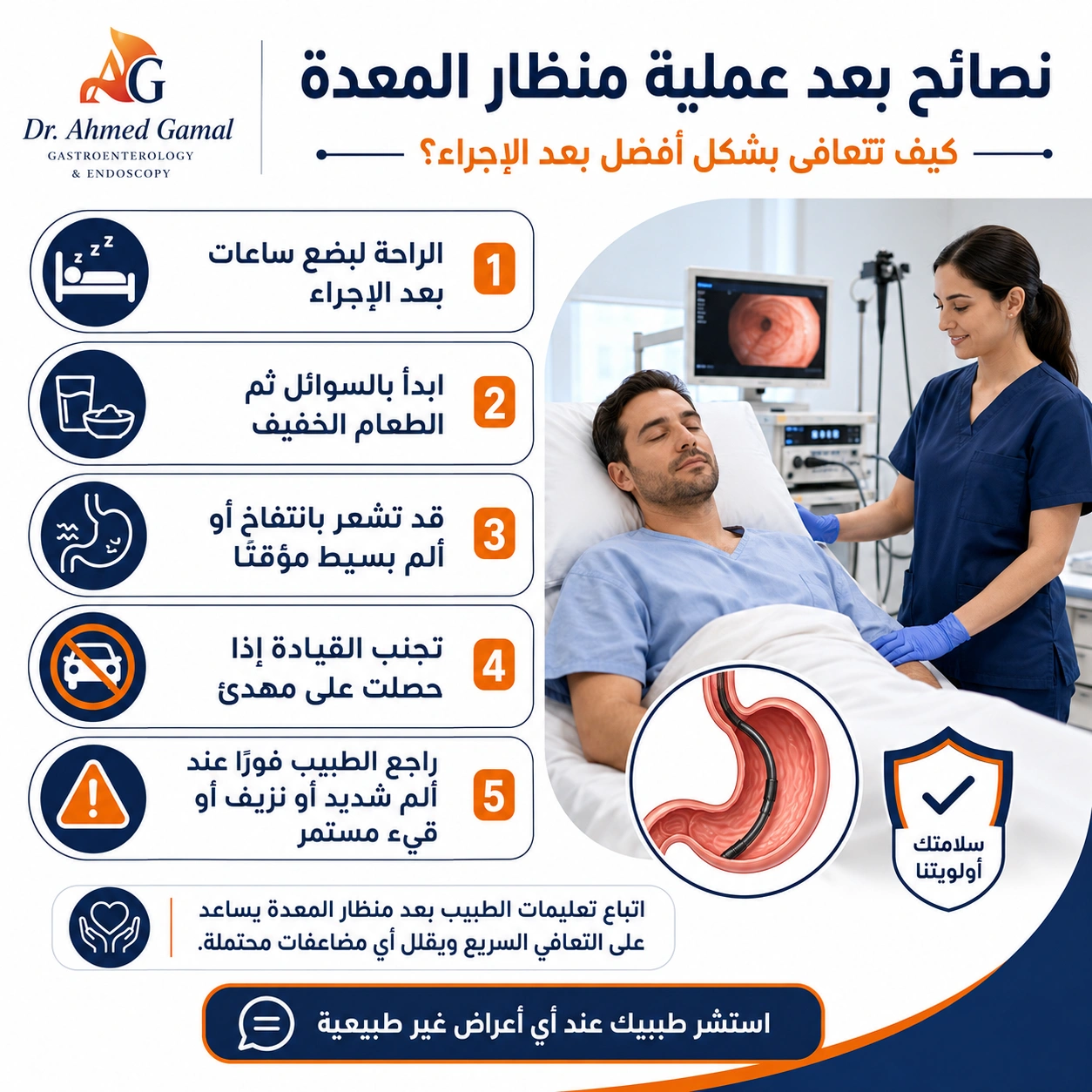
Essential tips after gastroscopy and colonoscopy include resting until sedation has worn off, arranging an adult escort, following the discharge instructions, starting food and drink as advised, and watching for warning signs. Mild bloating, gas, cramps, or a sore throat can be normal for a short time, but severe or worsening symptoms need prompt medical advice.
Your instructions may differ if the doctor took biopsies, removed a polyp, dilated a narrowing, stopped bleeding, or performed another treatment. The written discharge plan from the endoscopy unit takes priority because it is based on what happened during your procedure.
Call Dr Ahmed Gamal's clinic if you have questions after endoscopy or contact the team on WhatsApp for non-emergency follow-up and booking.
What is normal after gastroscopy?
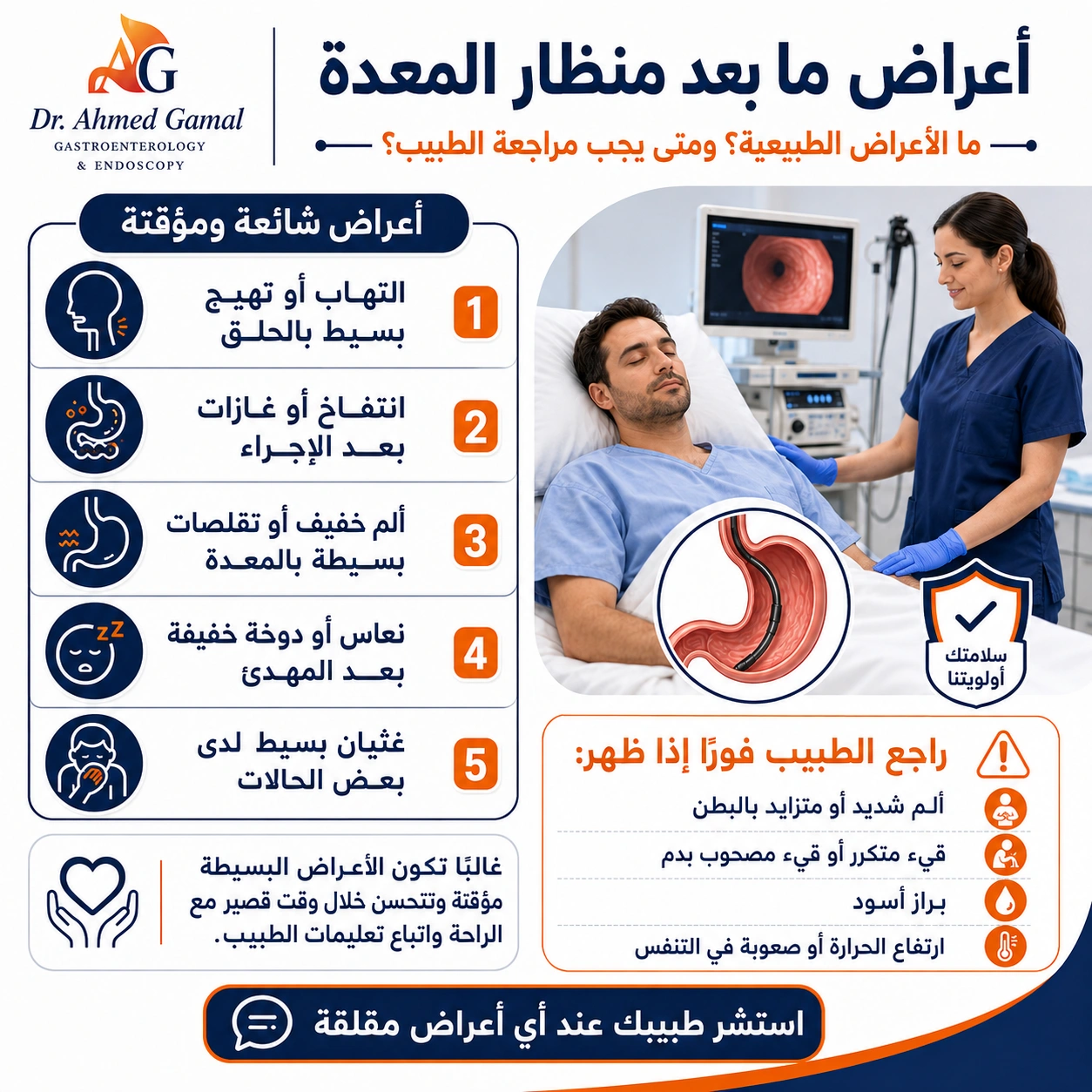
After gastroscopy, you may have a mild sore throat, belching, temporary bloating, or light nausea. Air or carbon dioxide used during the examination can cause fullness until it passes. These symptoms usually improve over several hours.
If throat spray was used, wait until sensation and swallowing are normal before eating or drinking, following the unit's specific timing. Starting too early can increase the risk of choking.
What is normal after colonoscopy?
After colonoscopy, gas, bloating, and mild cramps are common. Walking gently can help trapped gas pass. Bowel movements may be irregular for a short time after bowel preparation.
A small amount of blood may occur after a biopsy or polyp removal, but the endoscopy team should state what amount is expected. Significant, repeated, or increasing bleeding is not normal.
Rest after sedation
Sedative effects can continue after you feel awake. Reaction time, judgement, balance, and memory may remain impaired. Arrange for a responsible adult to take you home and, when instructed, stay with you during the early recovery period.
For the period specified by your centre, do not drive, operate machinery, drink alcohol, sign important documents, make major decisions, or take unapproved sedating medicines. Follow the endoscopy unit's instructions even if you feel completely normal.
Eating and drinking after gastroscopy
When the medical team confirms that it is safe to swallow, start with water or another permitted clear fluid. If this is comfortable, progress to a light meal. Avoid unusually large, very fatty, or strongly irritating meals if your stomach feels sensitive.
If a treatment was performed, the doctor may prescribe a liquid or soft diet for a specific period. Do not advance the diet faster than advised after dilation, bleeding treatment, or another intervention.
Eating and drinking after colonoscopy
Most patients can drink and eat after recovery, unless the team gives different instructions. Begin with fluids and a manageable meal. Rehydration is useful after bowel preparation, but patients with heart, kidney, or fluid-balance conditions should follow their individual plan.
Temporary gas does not mean you need to avoid food for a full day. Choose familiar foods and increase intake as comfort returns.
Ask the clinic about diet, medicines, or biopsy instructions or send a WhatsApp follow-up enquiry.
How to reduce bloating and gas
- Walk gently when you are steady and safe.
- Change position and avoid lying completely still for many hours.
- Drink permitted fluids gradually.
- Avoid carbonated drinks if they worsen bloating.
- Do not take extra medicines for gas or pain unless approved.
Mild cramps should gradually improve as gas passes. Severe, localised, or increasing abdominal pain needs assessment.
How to soothe a sore throat
After swallowing is normal, cool fluids or a simple lozenge may help, if permitted. Mild irritation should improve. Seek advice for worsening throat pain, inability to swallow, chest pain, breathing difficulty, or neck swelling.
Medicines after endoscopy
Restart regular medicines only according to the written plan. This is especially important for anticoagulants, antiplatelet medicines, diabetes treatment, and anti-inflammatory painkillers. The timing may differ after a biopsy or polyp removal.
Do not double a missed dose unless the prescribing clinician has told you to do so. If the instructions are unclear, contact the endoscopy team or the doctor who manages the medicine.
Pain relief after the procedure
Mild discomfort often settles without medicine. Use only the pain relief recommended by the clinical team. Some anti-inflammatory medicines can increase bleeding risk after certain interventions, so do not assume that every over-the-counter product is suitable.
Care after biopsy
Most biopsies do not cause noticeable pain. The doctor may give instructions about food, medicines, and bleeding. Pathology results take longer than the immediate endoscopy report because the tissue must be examined in a laboratory.
Confirm how and when results will be communicated. Do not assume that no phone call means a normal result; follow the stated process.
Care after polyp removal
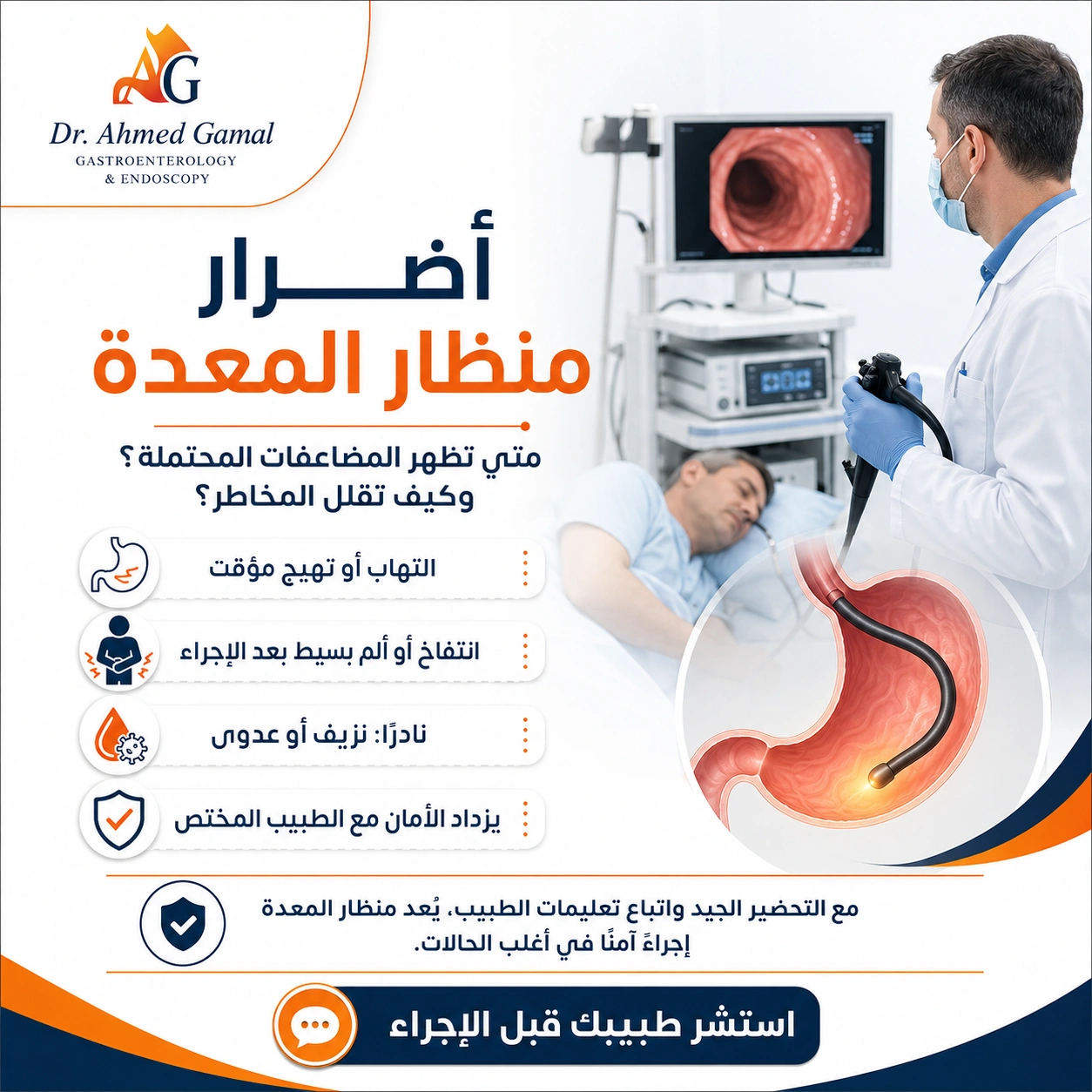
Polyp removal can create a delayed bleeding risk. Follow the restrictions on exercise, travel, medicines, and diet. Seek prompt advice for significant rectal bleeding, clots, dizziness, fainting, severe pain, or fever.
The exact risk depends on the size, location, and removal technique. Your discharge sheet should specify the emergency contact and the period of greatest concern.
Returning to work and exercise
After sedation, most people need the rest of the day away from work and activities that require concentration. Return to exercise according to the procedure and discharge plan. Light walking may help gas, while strenuous exercise and heavy lifting may be restricted after polyp removal or treatment.
What the immediate report means
The doctor may explain visual findings shortly after the procedure. Sedation can affect memory, so it is useful for the accompanying adult to hear the instructions. Ask for a written report and images when available.
A normal visual examination does not replace pending biopsy results. Keep the follow-up appointment if tissue was sampled or treatment was performed.
Urgent warning signs after gastroscopy
Seek urgent medical care for:
- Difficulty breathing.
- Worsening difficulty swallowing or severe throat pain.
- Severe or increasing chest or abdominal pain.
- Vomiting blood or coffee-ground-like material.
- Black, tar-like stools.
- Fever, fainting, or marked weakness.
Urgent warning signs after colonoscopy
Seek urgent care for:
- Severe or progressively worsening abdominal pain.
- A hard or increasingly swollen abdomen.
- Large amounts of rectal bleeding or blood clots.
- Repeated vomiting, fever, fainting, or breathing difficulty.
- Inability to drink or signs of dehydration.
Serious complications are uncommon, but early assessment matters. For severe symptoms, use emergency services rather than waiting for an online reply.
When to expect biopsy results
The timing varies by laboratory and by whether special tests are needed. Before leaving, ask when results are expected, who will discuss them, and how to arrange follow-up. Keep your phone number and contact details current.
Planning the first night
- Keep the discharge sheet and emergency number accessible.
- Stay with a responsible adult if instructed.
- Use only approved medicines.
- Eat and drink according to the plan.
- Rest and avoid driving or important decisions after sedation.
- Monitor pain, bleeding, fever, swallowing, and breathing.
Follow-up with Dr Ahmed Gamal
Follow-up may be needed to review biopsies, discuss polyps, adjust treatment, or plan further investigation. Browse the clinic's gastroenterology and endoscopy services for related care.
Frequently asked questions
Can I eat immediately after gastroscopy?
Wait until the team confirms that swallowing is safe, especially after throat spray. Then begin with fluids and a light meal unless different instructions were given.
How long does bloating last after colonoscopy?
It often improves over several hours as gas passes. Increasing pain, marked swelling, fever, or vomiting needs medical advice.
Can I drive home after sedation?
No. Arrange an adult escort and follow the centre's restrictions on driving and important activities.
Is bleeding normal after colonoscopy?
A small amount can occur after biopsy or polyp removal, but significant, repeated, or increasing bleeding requires urgent assessment.
When can I restart blood thinners?
Only at the time specified by the treating team. Timing depends on the medicine, why you take it, and what was done during endoscopy.
When should I receive biopsy results?
Timing varies. Confirm the expected date and follow-up method before leaving the endoscopy unit.
Call Dr Ahmed Gamal's clinic or book through WhatsApp for individual follow-up instructions.
Other Articles